

How to Track Spending Without a Spreadsheet
Spreadsheets get recommended constantly as the “right” way to track spending, but plenty of people try one, abandon it within a week, and conclude they’re just bad at budgeting. That’s usually not true it’s just that spreadsheets don’t fit everyone’s habits. If typing numbers into cells feels like a chore you’ll never keep up with, there are other ways to track spending that work just as well, sometimes better.
Why Spreadsheets Don’t Work for Everyone
Spreadsheets require a specific kind of consistency: sitting down, opening a file, and manually entering numbers on a regular basis. For some people, that’s satisfying. For a lot of others, it’s friction that stacks up fast miss a few days, and the backlog of transactions to enter starts to feel overwhelming enough to just give up.
The goal of tracking spending isn’t the spreadsheet itself. It’s knowing where your money goes. Any method that gets you that information reliably counts as working, regardless of whether it involves rows and columns.
Option 1: Bank and Credit Card Apps
Most banks and credit card companies now break down spending by category automatically, right inside their existing app. You didn’t sign up for a budgeting tool it’s already there, built into something you’re checking anyway.
This works well because it requires zero extra setup. The tracking happens whether you engage with it or not. The downside is that categorization isn’t always accurate a purchase at a big-box store might get lumped into “shopping” even if it was actually groceries so it’s more useful for a general sense of spending than precise category totals.
Best for: People who want tracking with no extra effort and don’t need category-level precision.
Option 2: A Dedicated Budgeting App
Apps built specifically for tracking spending sync with your accounts and sort transactions into categories automatically, often letting you set spending limits per category and get notified when you’re close. Some are free with limitations, others charge a subscription for full features.
The advantage over a spreadsheet is that the data entry happens for you. The advantage over a bank app is more control you can customize categories, set specific limits, and see trends over time instead of just a single month’s snapshot.
Best for: People who want spreadsheet-level detail without doing the data entry themselves.
Option 3: The Envelope Method (Cash or Digital)
Instead of tracking every transaction after the fact, the envelope method sets a spending limit per category up front groceries, dining out, entertainment and you spend from that limit until it’s gone. There’s nothing to log at the end of the month because the limit itself does the tracking; you already know where you stand by how much is left in the envelope.
This flips the usual order of operations. Instead of tracking spending to find out if you went over, you feel the limit as you approach it. For people who find after-the-fact tracking tedious, that shift alone can make budgeting stick where a spreadsheet didn’t.
Best for: People who overspend in specific categories and want a felt limit rather than a number to check later.
Option 4: The One-Number Method
Some tools and approaches boil tracking down to a single figure: how much you can safely spend right now, after bills and savings goals are accounted for. Instead of monitoring ten categories, you monitor one number that updates as you spend.
This isn’t as precise as full category tracking you won’t know exactly how much went to groceries versus entertainment but for people who find detailed tracking overwhelming, a single number is often the difference between checking in regularly and not checking in at all.
Best for: People who find multi-category tracking overwhelming and want the simplest possible check-in.

Option 5: A Weekly Money Check-In
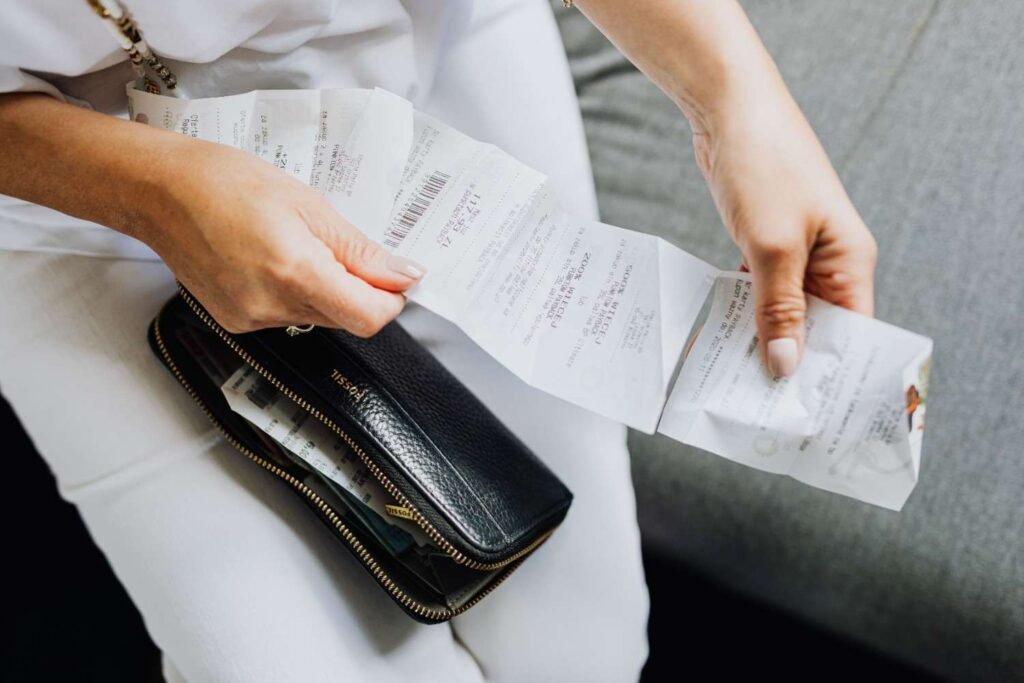
Instead of tracking every transaction as it happens, set aside ten or fifteen minutes once a week to look at what you spent. Pull up your bank statement or app, scan through the transactions, and get a general sense of where the money went and whether anything seems off.
This isn’t as precise as daily tracking, but it’s far more sustainable for people who don’t want tracking to be a daily task. A weekly rhythm still catches problems — a forgotten subscription, an unusually high grocery week early enough to matter, without requiring constant attention.
Best for: People who want awareness without a daily or constant tracking habit.
Option 6: Voice Notes or a Running List
For people who find apps and spreadsheets equally tedious, something as simple as a running note on your phone can work. Every time you spend something notable, add a quick line what it was, roughly how much. At the end of the week, glance back through it.
This method sacrifices precision for ease of use. It won’t give you exact category totals, but it builds the habit of noticing spending in the moment, which is often the real barrier a spreadsheet was trying to solve in the first place.
Best for: People who want the lowest-friction possible way to build spending awareness.
How to Pick the Right Method for You
A few questions can help narrow it down:
- Do you want detail or just awareness? If you need to know exactly how much went to each category, a dedicated budgeting app gets you there with the least manual work. If general awareness is enough, a weekly check-in or the one-number method will feel far less like a chore.
- Do you overspend in specific categories? The envelope method is built for exactly that problem — a felt limit instead of a number to review later.
- How much time are you actually willing to spend? Be honest here. A method that takes fifteen minutes a week and gets used beats a method that takes two minutes a day and gets abandoned after two weeks.
- Do you already check something daily? If you’re already opening your banking app regularly, building tracking into that existing habit is easier than adding a brand new one.
The Real Point of Tracking Spending
Tracking spending isn’t about the tool it’s about closing the gap between what you think you’re spending and what you’re actually spending. Most people who feel like they’re bad at budgeting have actually just been using a tracking method that didn’t match how they naturally operate. Switching to something that fits your habits usually solves the problem faster than trying to force discipline into a method that was never going to stick.
Moving Forward From Here
A spreadsheet is one way to track spending, not the only way. Bank apps, dedicated budgeting apps, the envelope method, a single spending number, weekly check-ins, or even a running note on your phone can all get you the same result: knowing where your money goes. Pick the method that matches how much detail you actually want and how much time you’re honestly willing to spend, and you’ll likely stick with it far longer than a spreadsheet you were never going to open.
FAQ
Do I need a spreadsheet to budget effectively?
No. Bank apps, budgeting apps, the envelope method, and even a simple running list can all track spending effectively without a spreadsheet.
What’s the easiest way to track spending with the least effort?
Using your bank or credit card app’s built-in spending breakdown requires no extra setup, since the categorization happens automatically as you spend.
How often should I check my spending if I’m not using a spreadsheet?
A weekly check-in of ten to fifteen minutes is usually enough to catch problems early without requiring daily attention.
Is the envelope method more effective than tracking after the fact?
For people who tend to overspend in specific categories, many find a felt limit more effective than reviewing spending after it’s already happened, since it creates a visible stop before you go over.
Can I track spending accurately without categorizing every transaction?
Yes, to an extent. A single “safe to spend” number or a general weekly review won’t give you exact category totals, but it can still catch overspending trends early.