

Sinking Funds Explained (With Real Examples)
This article covers general budgeting information, not personalized financial advice. Everyone’s income and expenses are different if you’re working through debt or a tighter budget, it’s worth talking to a licensed financial advisor or credit counselor about your specific situation.
Christmas comes every single year. So does your car’s registration renewal. So, probably, does a friend’s wedding, a vacation you’ve been wanting to take, or the day your laptop finally gives out. None of these are surprises, exactly you basically know they’re coming. And yet most people react to them the same way they’d react to a real emergency: scrambling for cash or reaching for a credit card at the last minute.
A sinking fund fixes that. It’s one of the most useful budgeting tools nobody teaches you in school, and once you get the hang of it, a lot of “unexpected” expenses stop being unexpected at all.
What a Sinking Fund Actually Is
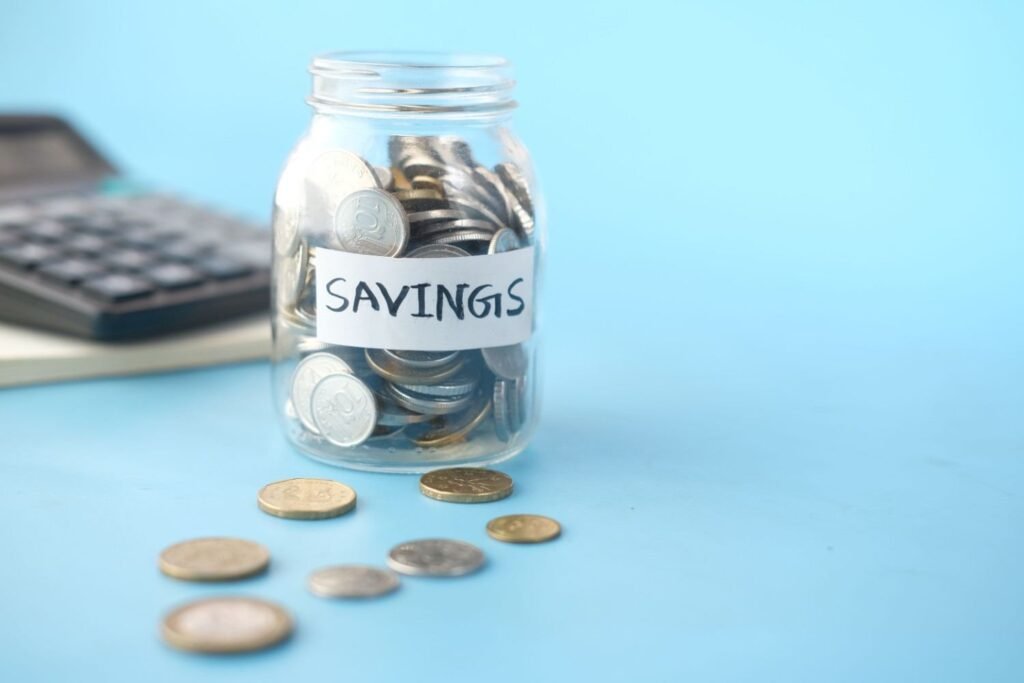
A sinking fund is money you save gradually, in small amounts, for a specific expense you know is coming instead of paying for it all at once when it arrives.
Say a $600 car insurance bill hits every six months. Instead of finding $600 in your account the week it’s due, you set aside $100 a month for six months. By the time the bill shows up, the money’s already there. No scramble, no credit card, no dent in your regular budget.
That’s the entire concept. Break a big, known cost into small, regular contributions, made ahead of time.
Sinking Fund vs. Emergency Fund
These two get mixed up constantly, so it’s worth being direct about the difference.
An emergency fund covers things you can’t predict a layoff, a medical bill, a sudden car repair. You don’t know when it’ll happen or how much it’ll cost, so the fund has to be flexible and ready for anything.
A sinking fund covers things you can predict, at least roughly. You know Christmas is in December. You know your car insurance renews every six months. You know roughly what a new set of tires costs. Because you can see it coming, you can save for it on a schedule.
One more distinction: an emergency fund is meant to stay intact as a safety net. A sinking fund is meant to get spent that’s the whole point. You save into it specifically so you can drain it when the expense hits, then start refilling it for next time.
Real Examples of Sinking Funds
Here’s where it gets useful. These are common sinking fund categories people actually use:
Holiday gifts. If you spend around $600 on gifts every December, saving $50 a month starting in January means the money’s sitting there ready by the time shopping season starts no January credit card hangover.
Car maintenance and registration. Oil changes, tires, annual registration fees. None of these are surprises, but they rarely show up in a “regular monthly expenses” budget either. A car sinking fund catches them.
Annual subscriptions and memberships. Amazon Prime, a gym membership billed yearly, domain renewals for a small business anything charged once a year instead of monthly is a perfect sinking fund candidate, since it’s easy to forget about until the charge hits.
Home and appliance repairs. Not a full emergency fund’s job, but a “something in this house will eventually break” fund. Water heaters, HVAC systems, and appliances all have a rough lifespan you can estimate when you’ll likely need to replace one and start saving ahead of that date.
Travel. A wedding you’re flying out for, a trip you’re planning six months from now, even a work conference with expenses you’ll front yourself. Saving monthly toward a known trip cost beats charging the whole thing right before you leave.
Pet care. Annual vet visits, flea and tick prevention, boarding costs when you travel predictable pet expenses that are easy to underestimate until the bill arrives.
Property taxes or insurance premiums paid annually. If your homeowner’s insurance or property tax bill comes once a year instead of monthly, breaking that number into twelve smaller monthly contributions makes it far less painful when it’s due.
How to Set Up a Sinking Fund
Step 1: Name the expense and the amount. Be specific. Not “car stuff” “$800 for new tires in October.” A vague sinking fund is easy to underfund or accidentally spend on something else.
Step 2: Figure out the timeline. When does the money need to be ready? If tires need replacing in ten months and you need $800, that’s $80 a month.
Step 3: Open a place to keep it. Some people use one savings account with sub-categories tracked in a spreadsheet or budgeting app. Others open a separate savings account per sinking fund, especially if their bank allows naming multiple accounts “Tires,” “Holidays,” “Vet Bills.” Either works; pick whichever keeps you from accidentally spending the money on something else.
Step 4: Automate the contribution. Set up a small automatic transfer on payday, even if it’s a modest amount. Consistency matters more than the dollar figure $30 a month reliably beats $200 whenever you remember.
Step 5: Spend it when the expense hits then restart. This is the part people sometimes forget. The money isn’t meant to sit there forever. When the bill comes, use the fund for exactly what it was built for, then start the next cycle.
A Common Mistake: Too Many Funds at Once
Sinking funds are genuinely useful, but it’s easy to get carried away and open ten of them at once one for gifts, one for tires, one for vacation, one for a new mattress, one for a friend’s baby shower. If your budget can’t actually support ten simultaneous monthly contributions, you end up underfunding all of them.
A better starting point: pick the one or two expenses that have caused you the most financial stress in the past year. Maybe it was the holiday season. Maybe it was a car repair that came out of nowhere even though your car’s been making that noise for months. Start there, get the habit working, then add more categories once the first ones feel automatic.
Sinking Funds Aren’t Just for People on Tight Budgets
There’s a misconception that sinking funds are only for people who are struggling financially. In reality, they’re just as useful for people with healthy incomes the difference is what breaks the budget. Even someone earning well can get thrown off by an $1,800 annual insurance premium landing the same month as a big vacation, simply because neither was planned for on a monthly basis. Sinking funds aren’t a sign of financial trouble; they’re a sign of planning ahead.
Give Predictable Expenses a Home Before They Show Up
The expenses that feel like emergencies most often aren’t emergencies at all they’re predictable costs that just weren’t planned for. A sinking fund takes something you already know is coming and spreads the cost out ahead of time, so when the bill actually arrives, it’s already handled. Start with one category, automate a small monthly transfer, and build from there.
FAQ Section
Q: How is a sinking fund different from just saving money in general?
A: General savings can be for anything, with no specific expense or timeline attached. A sinking fund is tied to a named expense with a rough amount and date it’s savings with a specific job to do.
Q: Do I need a separate bank account for every sinking fund?
A: No, Some banks let you open several savings accounts and name each one, which some people find easier to track. Others keep everything in one account and use a spreadsheet or budgeting app to divide it mentally. Either approach works as long as you know how much belongs to each category.
Q: What if I don’t spend the full sinking fund amount?
A: That’s a good outcome leftover money can roll into the next cycle for that same category, or get redirected to another sinking fund goal.
Q: Can a sinking fund earn interest?
A: If it’s kept in an interest-bearing savings account, yes, though the amounts are usually small since the money is meant to be spent within months rather than left to grow long-term.
Q: What’s a realistic first sinking fund to start with?
A: Holiday gifts and car maintenance are common starting points, since both are predictable, happen at least once a year, and tend to catch people off guard when they arrive.